
AI Model Hub
A unified workspace and API giving access to 500+ AI models across video, image, music, voice, chat, and agents under one credit balance.
Are you the maker? Claim this listing to keep info, pricing and screenshots current. Verified via your tool's domain email.
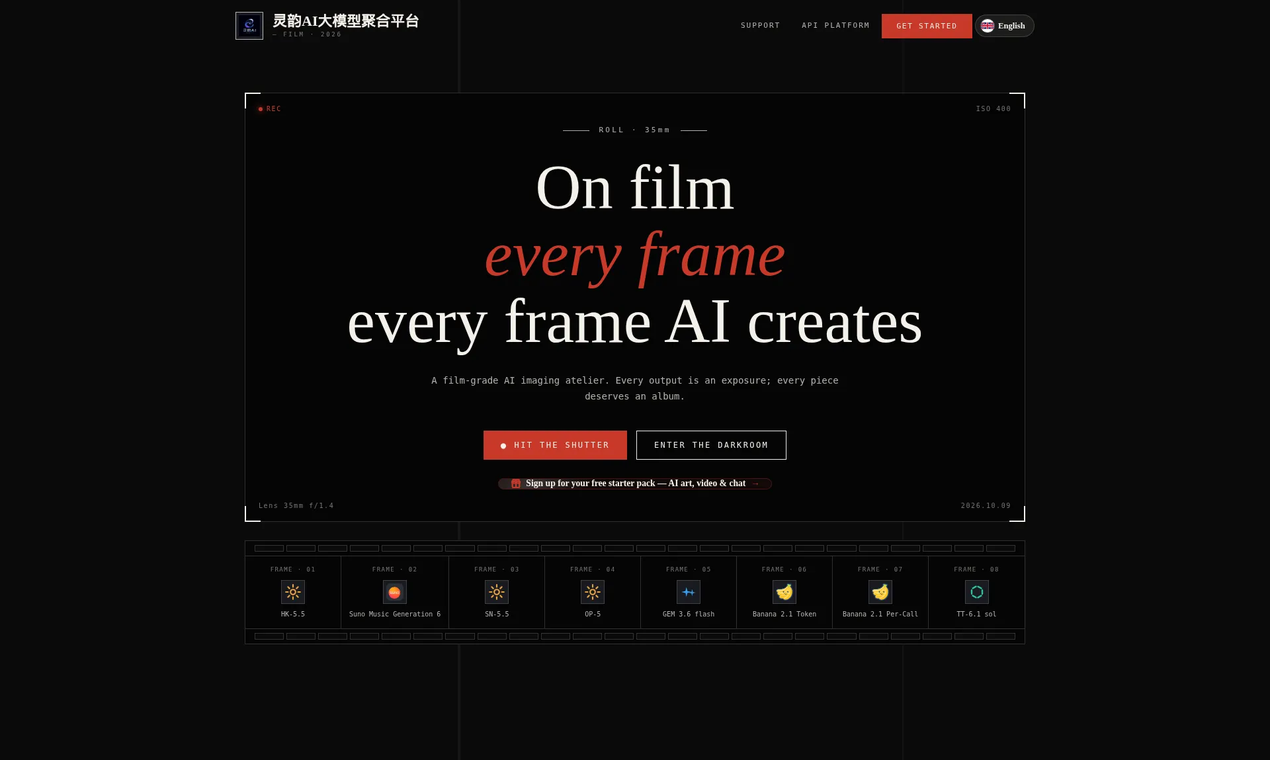
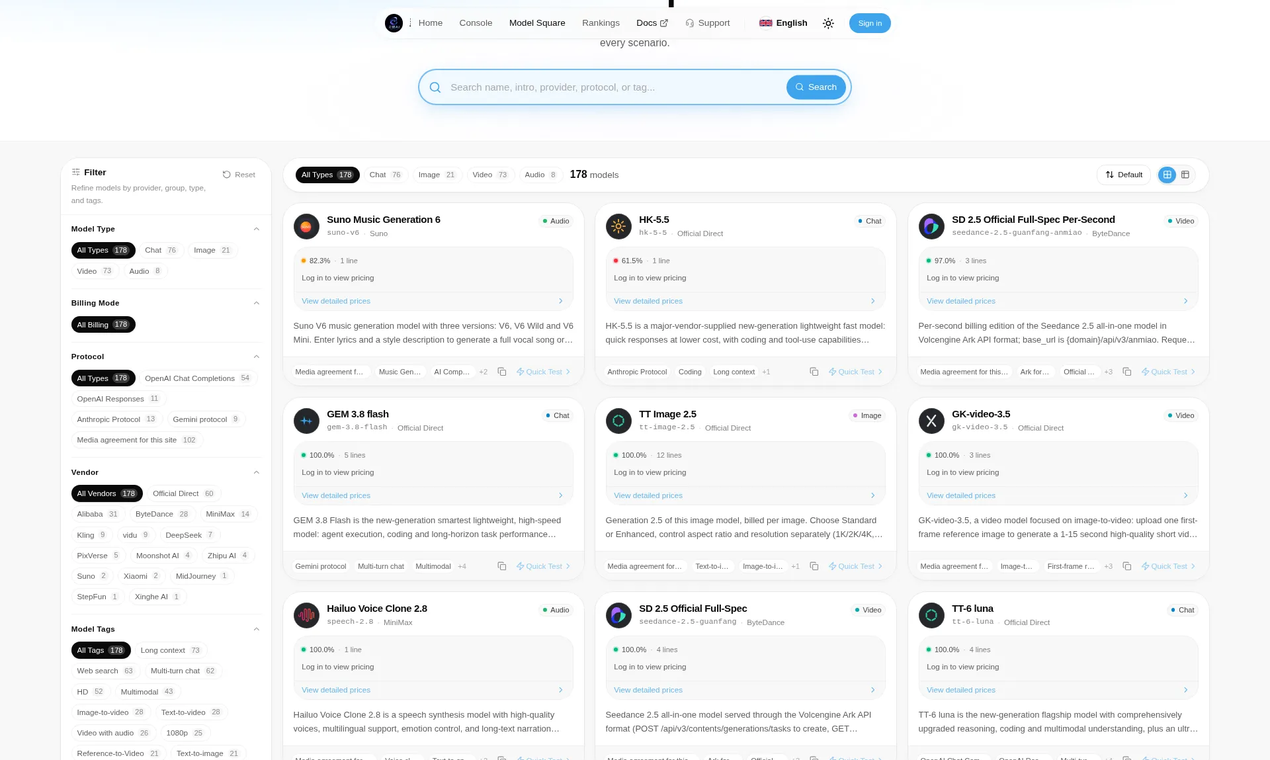
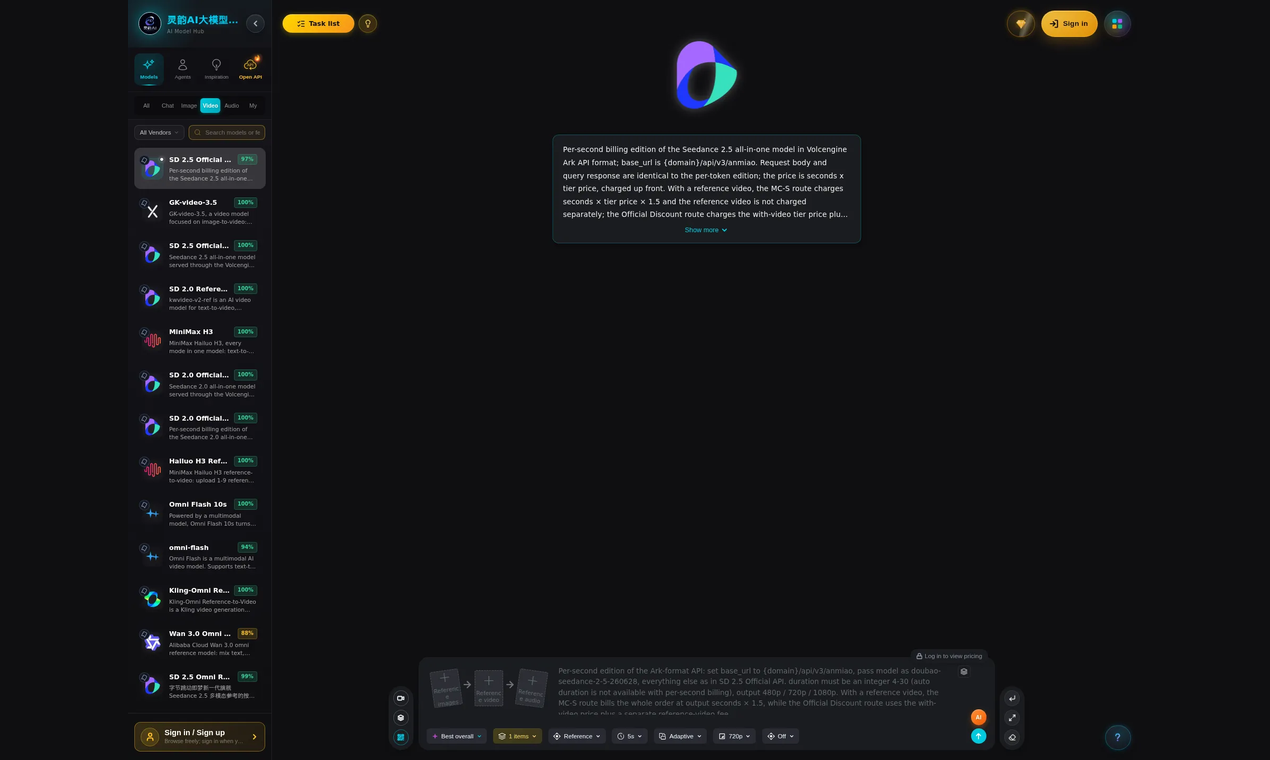
AI Model Hub suits developers and small teams who want a single API key and credit balance to reach frontier models across every modality, from Sora 2 video to Suno music to GPT-5.5 chat, without juggling separate subscriptions. The breadth is real, but the pricing page reveals almost nothing about what credits cost or what the paid tiers include, which makes budgeting a genuine gamble before you sign up. If you need a focused coding assistant rather than a multi-modal aggregator, look elsewhere.
What is AI Model Hub?
AI Model Hub gives you 178 AI models in one place, including Seedance 2.5, Hailuo, Kling and Suno, for video, image, music, text-to-speech and LLMs. Use them through a unified API or the web workspace, with one shared credit balance. Usage-based credits, and new users get a free starter pack.
How we scored AI Model Hub
Capability scores 17 because the model catalog breadth is genuinely impressive (500+ models, every major modality, frontier names like Sora 2 and GPT-5.5), but the tool is an aggregator with no proprietary model or unique output quality advantage over going direct to providers, and it has zero IDE integration compared to directory competitors Cursor and GitHub Copilot. Ease of use scores 14 because the API compatibility layer is a real convenience, but the white-label subdomain sprawl and the complete absence of visible documentation or onboarding detail in search results suggest a rough experience for new users. Value scores 10 because no paid tier prices were findable at review time, making it impossible for a buyer to assess cost before signing up; a tool where you cannot know what you will pay before creating an account is structurally poor value for budget-conscious developers, even if the underlying credit rates turn out to be competitive. Delivery scores 11 because there is no independent user sentiment, no third-party coverage, and the multi-subdomain reseller structure raises real questions about who owns the SLA and whether the 99.99% uptime claim is verifiable; heavy marketing claims with thin public evidence of delivery is a meaningful trust gap.
Pros and cons
What we liked
- Single API endpoint compatible with OpenAI, Anthropic, and Gemini SDKs, letting developers swap between 500+ models without rewriting client code.
- Unusually broad modality coverage in one platform: frontier video generators (Sora 2, Veo 3.1, Kling), image generators (Midjourney, GPT Image 2), music (Suno), TTS, agents, and LLMs all share one credit balance.
- Free starter pack lowers the barrier to test the catalog before committing any spend, and the usage-based credit model means no wasted subscription cost for low-volume users.
Where it falls short
- Pricing is almost entirely opaque: the pricing page at review time showed no named paid tiers, no credit bundle prices, and no per-model cost table, making it impossible to budget a production workload before signing up.
- The platform operates across multiple white-labeled subdomains, suggesting a reseller infrastructure that introduces uncertainty about API stability, SLA ownership, and which entity is actually serving requests in production.
- No native IDE integration or code-editor plugin exists; the tool is purely web and API, so developers who want inline code suggestions or editor-native agentic workflows get nothing here that GitHub Copilot or Cursor do not do better.
Key features
Who should use AI Model Hub?
A backend developer who already calls the OpenAI API and wants to swap in Kling video or Suno music without adding new SDKs or billing accounts will get immediate value here. The same applies to a small product team running experiments across multiple modalities: one credit pool and one dashboard beats five separate invoices. Teams building e-commerce tooling may also find the dedicated product-image and product-video generation features useful without stitching together separate services.
Anyone whose primary need is writing, reviewing, or completing code inside an editor should look elsewhere. GitHub Copilot integrates directly into VS Code and JetBrains IDEs with inline suggestions and agentic workflows, making it a far better fit for day-to-day coding work than a browser-based model aggregator. If budget is the main concern and the use case is purely LLM chat or code completion, Cursor's native model routing at a fixed monthly price will be more predictable than AI Model Hub's opaque credit system.
Skip it if: Anyone who needs a dedicated coding assistant or transparent, predictable per-tier pricing
Frequently asked questions
How many AI models does AI Model Hub actually include?+
The live site lists 500+ active models as of October 2026, spanning video, image, chat, music, voice, agents, and writing. The submitted description cited 178, so the catalog has grown significantly and appears to be updated regularly.
Can I use my existing OpenAI SDK code with AI Model Hub?+
Yes. The platform's API is compatible with the OpenAI, Anthropic, and Gemini calling conventions, so you can point an existing SDK at AI Model Hub's endpoint and select a different model with minimal code changes.
Is there a free tier or trial?+
New users receive a free starter credit pack. The schema.org data on the pricing page confirms a $0 entry point, but the exact credit amount in the starter pack was not disclosed on the public pricing page at review time.
What does it cost to use paid models like Sora 2 or Midjourney?+
Specific credit bundle prices and per-model costs were not visible on the pricing page at review time. You would need to create an account to see the full credit pricing before committing to a production workload.
Does AI Model Hub have an IDE plugin or editor extension?+
No. The product is web-based and API-only. There is no VS Code extension, JetBrains plugin, or other editor integration listed on the site.
Is AI Model Hub suitable for team use?+
The platform explicitly markets team workspaces, citing 12,800+ teams using it. The team plan promises one shared account and one bill, though specific per-seat pricing or team tier details were not publicly listed at review time.
More AI Coding & Dev Tools
See all categoriesGet your tool listed on 300+ directories.
One listing here is a strong start. But the founders who get discovered everywhere are listed everywhere. Our sister site, Free AI Directories, submits your tool to 300+ AI directories for you, every single one by hand, by a real person.
It is a one-time payment of $49, no subscription, and you can follow along as the submissions land. Prefer the slow route? The same site keeps a free list of 450+ directories you can work through yourself.
Get my tool listed on 300+ directoriesOne-time payment, no subscription · 100% human submissions · Free list of 450+ directories included.