Best AI Marketing Tools for Content, SEO and Sales
Compare the best AI marketing tools for content, SEO, sales, campaigns, and analytics. See who each suits and where to check current pricing.
A marketer has twenty tools bookmarked, a campaign brief open, and no clear choice for getting the work done. One platform promises better copy. Another offers search insights. A third combines scheduling, customer data, and automation, but requires a larger commitment than the campaign seems to justify.
The best AI marketing tools solve different jobs. Jasper supports branded content production. Canva helps turn ideas into visual assets. Semrush and Surfer support search work, while Buffer and HubSpot handle different parts of campaign execution. Comparing them on a single scale hides those differences.
The shortlist below separates content, SEO, campaign management, and analytics needs while keeping each tool's limitations visible. Descriptions reflect vendor websites and published listing details, not hands-on testing. No tool paid for placement.
Pricing changes, and subscriptions can include separate allowances, contacts, seats, or add-ons. Buyers should confirm current terms on each vendor's site before committing.
Table of Contents
- Best AI Marketing Tools Hand-Verified and Ranked
- Jasper
- HubSpot Marketing Hub
- Semrush
- Canva
- Buffer
- Surfer
- How the Six Tools Compare on Main Job, Free Access, and Listed Starting Price
- Narrowing Your Shortlist Before You Buy
Best AI Marketing Tools Hand-Verified and Ranked
Best for the discovery job, not campaign execution. The hand-reviewed marketing tools guide covers 751 verified tools across 13 categories, combining editorial reviews, category pages, side-by-side comparisons, and an explanation of the evaluation process. It's a starting point for narrowing a crowded field, rather than another application that creates or publishes campaigns.
Every listed tool carries an Editor's Score from 0 to 100, and comparison pages place features, pricing, and scores next to each other. A team seeking social publishing needs a different shortlist from a team fixing technical SEO problems, so the score works best as a filter, not a verdict.
What the Rankings Help Compare
The score breaks into four sub-scores: Capability, Ease of use, Value, and Delivery against stated promises. A product with a strong feature list can still score lower on delivery, and that gap matters when a campaign has a hard launch date. Each listing also states real pros, cons, and pricing, so the weaknesses sit next to the strengths instead of behind a sales page.
Useful starting point. Human review before publication keeps scraped, abandoned listings out of the results.
Clearer trade-offs. Stated pros and cons help buyers compare tools on actual tasks.
Editorial independence. The directory has 0 pay-to-rank slots, and the optional Fast Track add-on buys review speed only, never a score, ranking, category placement, or badge.
Important limitation. A general ranking won't reflect a team's approvals, integrations, or customer-data requirements.
For social publishing specifically, the social media AI recommendations from PostSyncer provide another discovery route. Compare the underlying jobs rather than assume matching category labels mean matching functionality.
Practical rule: An editorial score belongs at the start of a shortlist. A representative campaign task should determine the final choice.
The directory suits marketers who need help choosing candidates. The selected software, the measurement baseline, and the results still sit with the team.
Jasper
Best for branded content production. Jasper describes a marketing-focused platform for creating written and visual content across channels. Its listed Brand Voices, Knowledge assets, Audiences, and workflow agents provide reusable context for campaign drafts.
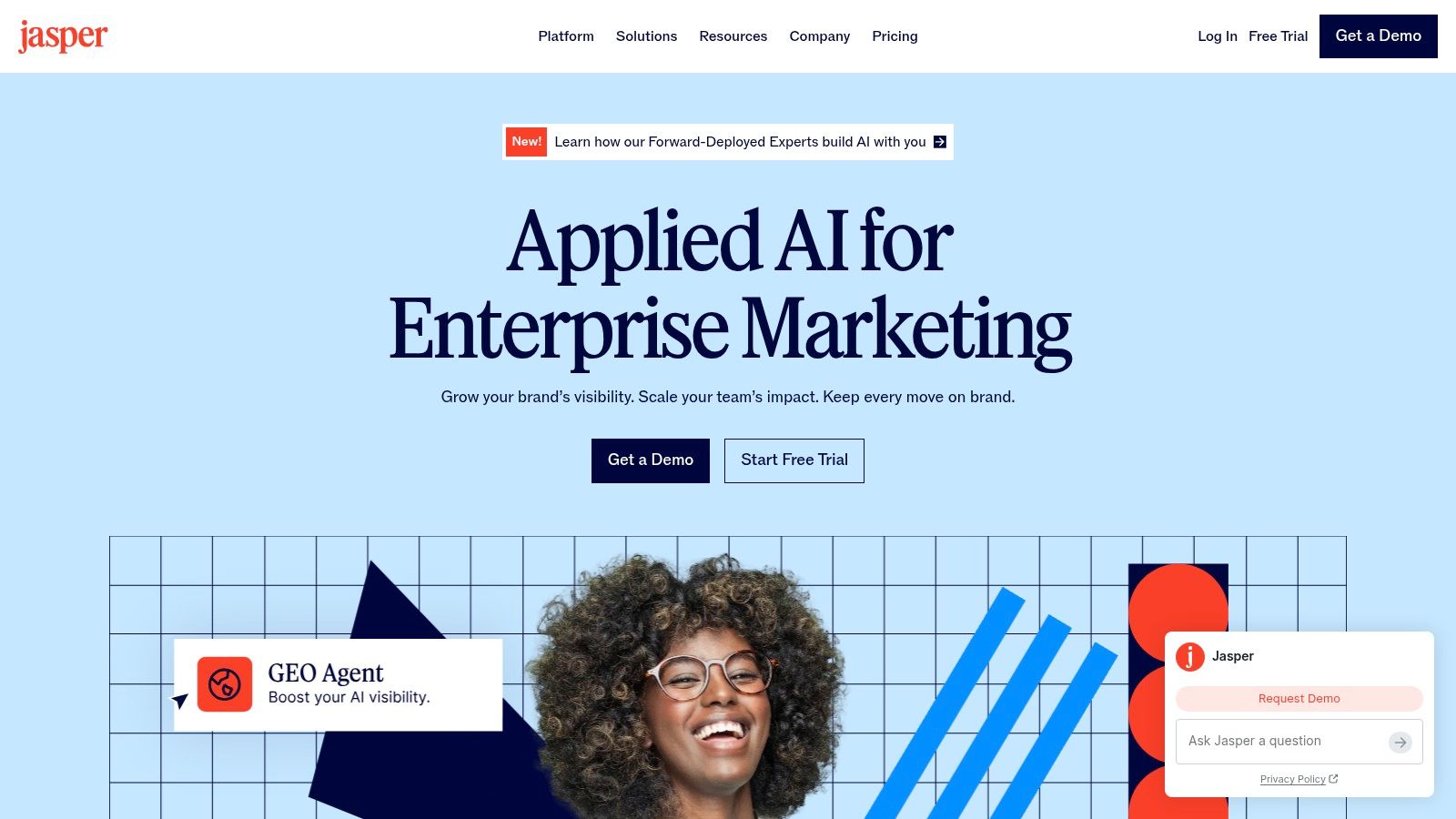
A content team could use approved product information to draft an email, website copy, and social variations around the same offer. The practical benefit is less repeated briefing. The limitation is that stored brand context doesn't establish whether every generated statement is true.
Where the Subscription Makes Sense
According to Jasper's vendor pricing page, Pro costs $59 per month billed yearly or $69 billed monthly, includes one seat, and supports multiple brands and campaign collaboration; buyers should check that page for current pricing and trial terms. Business pricing is custom and adds customized AI features, security, training, and support.
Strong fit. Teams producing recurring campaign content can make use of reusable brand context.
Weaker fit. Occasional writers may struggle to justify the paid entry cost.
Review requirement. Editors still need to verify claims, remove repetition, and check whether variations say something meaningfully different.
The AI writing tools category helps distinguish dedicated content platforms from broader writing assistants.
Jasper isn't a substitute for SEO research, attribution, or campaign delivery. Its strongest role is helping a content team move from an approved brief to editable drafts. A useful evaluation compares total time to approved copy, including revisions, rather than generation speed alone.
HubSpot Marketing Hub
Best for campaign management connected to customer records. HubSpot Marketing Hub combines marketing functionality with HubSpot CRM, the customer relationship management system that stores contact information and activity. Its Breeze features assist with content while campaign tools support email and automation, depending on the subscription.
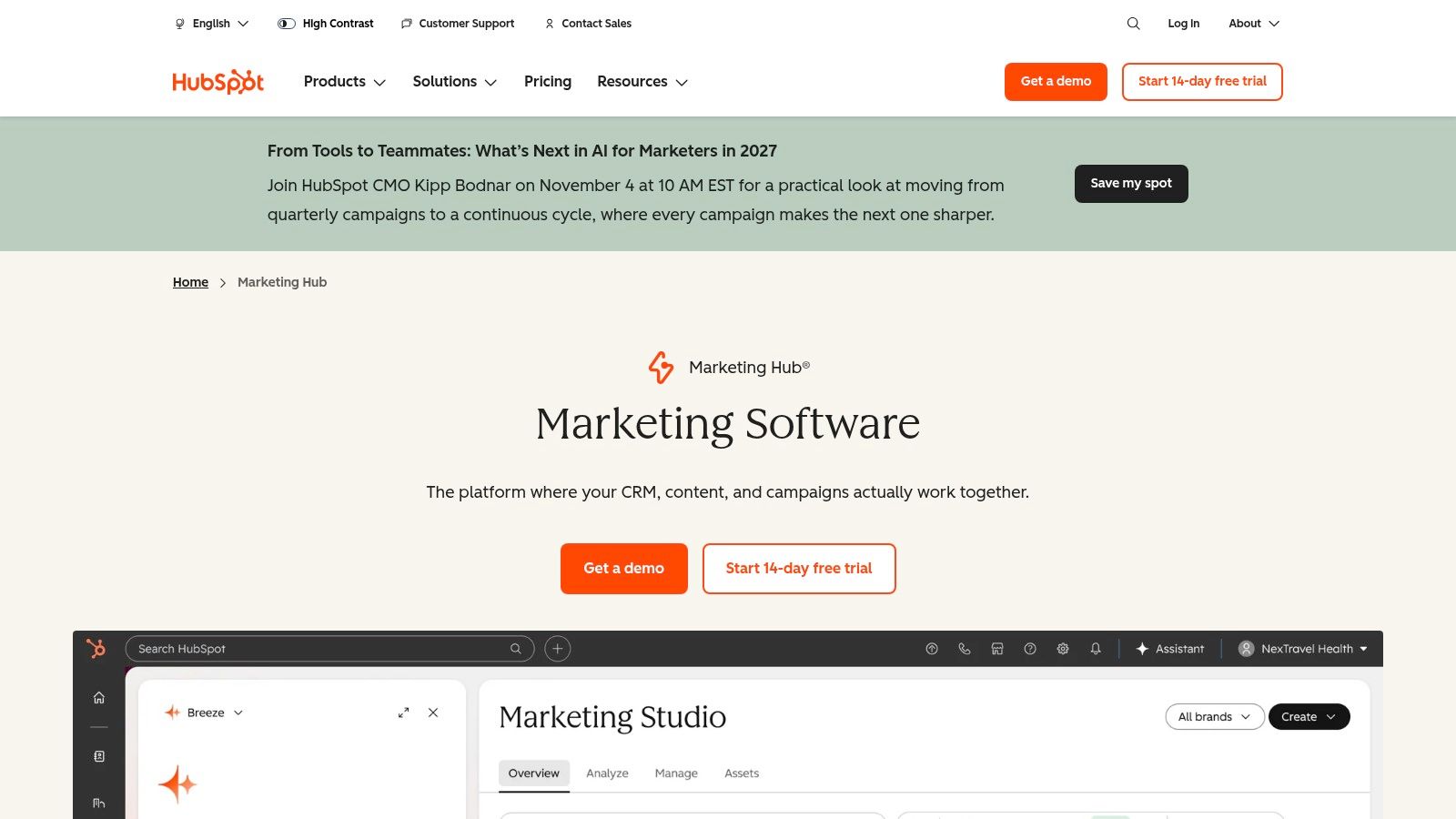
That combination suits a business trying to connect a landing-page response with a contact record and follow-up workflow. It's a different purchase from a standalone copy generator. The work includes contact organization, permissions, and campaign setup, not just prompts.
Separate Basic Assistance From Agents
HubSpot's AI marketing tools overview says basic AI features are available across plans, including its free version, while autonomous content, customer, and prospecting agents require Professional or Enterprise subscriptions and consume HubSpot Credits per action. Those are vendor-published terms, so buyers should verify current access, pricing, and credit requirements on HubSpot's site.
A connected campaign platform is only as useful as the contact data and workflow rules the team maintains.
The trade-off is breadth versus setup. A team can keep more campaign work near its customer records, but must learn the platform and understand plan boundaries. Contact volume and usage also belong in the cost review.
Businesses assessing adjacent systems can compare marketing and sales engagement platforms. Marketing Hub provides the shortlist's clearest connection to leads, but it shouldn't be treated as complete coverage of sales prospecting, outreach, and forecasting.
Semrush
A search team needs to know what to publish and what to fix, not merely how to generate a draft. Semrush lists keyword research, competitor analysis, SEO audits, content tools, and AI-search visibility monitoring within its broader digital-marketing platform.
Its job is primarily research and measurement. A marketer could investigate competing pages, identify a target topic, review site issues, and monitor visibility. AI-search monitoring adds another view of brand discovery, but visibility isn't the same thing as qualified traffic or revenue.
Buying the Right Toolkit
Semrush's range creates a purchasing trade-off. Buyers should identify which toolkit contains each required capability instead of assuming a subscription includes every feature shown across the website.
Search planning. Keyword and competitor research support decisions about topics and opportunities.
Site diagnosis. SEO audits help organize technical issues for review and correction.
Visibility monitoring. Search and AI visibility features support ongoing observation.
Cost control. Plans and add-ons need checking against the actual workload.
The vendor lists limited free access and paid options. Buyers should confirm current pricing, included reports, and add-on costs directly on its site.
The AI SEO tools category offers a route to narrower alternatives when the full platform exceeds the job.
Semrush doesn't replace a campaign analytics system. Search metrics should be considered alongside website conversions and customer outcomes. A small team that only needs caption drafts is unlikely to need this breadth. A search-focused team has a clearer reason to evaluate it, provided someone can interpret the reports and act on the findings.
Canva
Best for producing finished visual assets. Canva combines templates, drag-and-drop editing, AI-assisted creation, and collaboration for marketing formats such as social posts, presentations, videos, and ads. Its advantage over a text-only assistant is the surrounding design workflow.
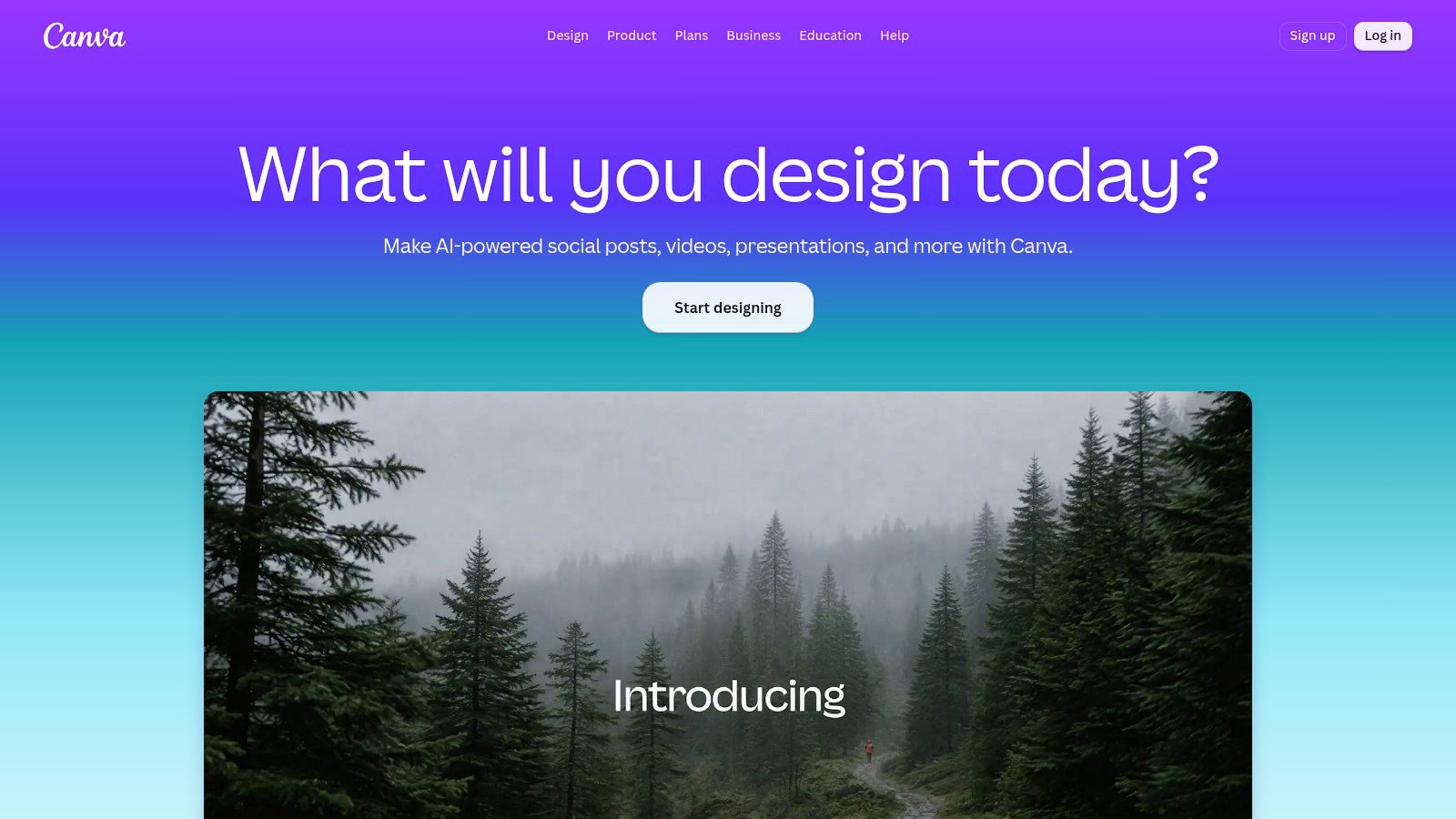
Say a business needs a promotional graphic, a presentation slide, and a social version of the same offer. Canva gives the marketer a workspace for adapting those assets. Paid-plan Brand Kits and collaboration features can support consistency, though an editor still needs to check typography, layout, claims, and image details.
AI Allowances Matter
Canva's vendor pricing page lists up to 20 uses of Standard or Premium AI tools on Free, while Pro includes up to 200 Premium uses or 20 Ultra uses; buyers should check the current plan terms and pricing there before subscribing. Canva states that allowances are pooled across the listed AI tools and reset monthly.
Good fit. Non-designers creating recurring marketing materials can work from established formats.
Main constraint. AI access and premium assets vary by subscription.
Editorial responsibility. Generated visuals still need checks for brand fit and misleading details.
Canva isn't a replacement for campaign attribution or advanced search analysis. Its scheduling and ad-related features on selected plans shouldn't be assumed to equal a dedicated campaign platform.
A useful evaluation starts with an approved brand asset and follows it through adaptation, review, and export. The meaningful question is whether the team can produce usable creative with fewer corrections, not only whether it can generate an attractive initial image.
Buffer
Best for organizing social publishing. Buffer lists an AI Assistant for ideas, caption variations, and repurposing alongside scheduling, publishing, analytics, and a community inbox. That focus suits creators and small teams whose main problem is maintaining a manageable social workflow.
A marketer could adapt an approved announcement for different networks, review each version, and place the posts into a publishing schedule. The AI assistance supports preparation. It doesn't remove the need to check whether the wording, links, and post format suit each destination.
Evaluate the Publishing Path
Buffer's vendor site lists a free plan and channel-based paid subscriptions. Buyers should check current pricing, scheduled-post limits, supported networks, and trial terms there rather than assume every account or format works the same way.
Focused scope. Drafting and scheduling sit close together.
Scaling consideration. Channel-based charges need reviewing as accounts increase.
Operational check. Required post types and publishing permissions should be confirmed before migration.
Analytics boundary. Social performance reports aren't a complete explanation of marketing revenue.
A comparison with the Simple Post listing can help clarify which publishing workflow better matches the team's needs.
Publishing safeguard: An approval step should check the destination account, scheduled time, destination link, and final creative, not just the caption.
Buffer doesn't fit a technical SEO audit or a complex CRM nurture program. Its narrower purpose is useful when social publishing is the bottleneck and the team doesn't need a broader suite. Evaluation should include a complete draft-to-publication task, plus a check of how the team handles corrections.
Surfer
Best for SEO-focused content workflows. Surfer lists content optimization guidance, the Surfy AI assistant, keyword research, audits, and content tracking. Higher-tier offerings include AI visibility tracking and additional collaboration capabilities.
The practical distinction from Jasper is the job. Jasper emphasizes campaign content and reusable brand context. Surfer centers on creating and improving search-oriented pages, making it a closer fit for editors working from an SEO brief.
Guidance Isn't Editorial Proof
A content team could use Surfer to identify coverage gaps in an existing article, revise the draft, and track the page afterward. The editor should still decide whether suggested additions answer the reader's question or merely repeat what competing pages already say.
Useful connection. Content optimization sits alongside keyword research and audits.
Plan constraint. Document and page allowances vary by subscription.
Advanced requirements. AI visibility and collaboration needs may require a higher tier.
Quality boundary. Optimization guidance doesn't verify sources or create original expertise.
Published plans include Discovery, Standard, Pro, and Peace of Mind. Buyers should check current prices, billing commitments, and included allowances on Surfer's vendor site.
Surfer doesn't replace campaign management, customer records, or revenue attribution. It also shouldn't dictate every editorial decision. A stronger evaluation compares the original and revised article for accuracy, usefulness, readability, and search performance, without treating an optimization score as a ranking guarantee.
For teams choosing between Semrush and Surfer, the central question is scope. Broad search research and competitive monitoring point toward Semrush. A concentrated content-optimization workflow points toward Surfer.
How the Six Tools Compare on Main Job, Free Access, and Listed Starting Price
Six tools, six different jobs. The rows below group them by the problem each one is built to solve.
| Tool | Main job | Free access | Listed starting price | Best for |
|---|---|---|---|---|
| Jasper | Creates marketing content across channels | Evaluation terms on Jasper's site | $59 per seat/month, billed annually | Marketing teams producing branded content |
| HubSpot Marketing Hub | Combines marketing automation with CRM | Free tools available | Free tools plus paid tiers | Teams connecting marketing with customer data |
| Semrush | SEO, content, competitor research, and AI search visibility | Limited free access | Tiered subscriptions across toolkits | Marketers needing research and visibility tools |
| Canva | Designs visual marketing assets | Free plan with listed AI allowances | Free plan plus a paid Pro subscription | Marketers creating visual content |
| Buffer | Schedules and publishes social media posts | Free plan available | Free plan plus paid tiers | Creators and small teams running social accounts |
| Surfer | Plans and optimizes SEO content | Evaluation terms on Surfer's site | Four published tiers, from Discovery to Peace of Mind | Content teams seeking SEO guidance |
Jasper publishes the only fixed starting figure in this group; the rest set prices by plan and billing term on their own sites. I treat this column as a budget filter rather than a quote. Sales coverage is thin across the list, and no vendor paid for placement. Confirm current figures on each vendor's site before shortlisting.
Narrowing Your Shortlist Before You Buy
The most useful buying routine starts with the job consuming the most time. For repeated branded drafts, Jasper belongs on the shortlist. For visual asset production, Canva is more directly relevant. Buffer addresses social publishing, HubSpot connects campaigns with customer records, and Semrush or Surfer support different search workflows.
Shortlist two or three candidates for that job, then inspect current plans, trial terms, usage allowances, and add-on costs on each vendor's site. A free trial is a temporary evaluation period, not a free plan. Available directory reviews and side-by-side comparison pages can help organize the decision, but the final check belongs against the vendor's current terms.
Define Renewal Before Subscribing
The measurement gap matters. Jasper's State of AI Marketing report found that 49% of surveyed marketers currently measure AI-investment ROI, which makes a clear baseline especially important.
Record the baseline. Capture current production time, review effort, costs, and relevant campaign outcomes.
Use representative work. Evaluate an ordinary campaign task, not just a favorable demonstration.
Count implementation effort. Include training, setup, revisions, and ongoing administration.
Set a renewal condition. Define what improvement would justify keeping the subscription.
This shortlist has gaps. It doesn't provide deep coverage of dedicated sales outreach, lead qualification, forecasting, or cross-channel attribution. HubSpot offers the closest connection to customer records, while the search and social products provide narrower measurement.
AI Tool Seekers listings reflect hand-verified review and editorial opinion, not professional advice. Neither a listing nor an editorial score guarantees traffic, rankings, sales, or another outcome. The strongest choice is the tool that fits an existing workflow and produces a defensible improvement after human review.
For task-based discovery, editorial reviews, and side-by-side comparisons of AI marketing software, marketers can visit AI Tool Seekers. Its tool finder and cost calculator can help turn a broad collection of bookmarks into a focused shortlist for the next campaign.