iLoveSong.ai vs MusicLab

iLoveSong.ai vs MusicLab: score breakdown
iLoveSong.ai scores 68/100 against 60/100 for MusicLab, an 8-point gap. ILoveSong.ai is ahead on Capability (19 vs 13), Ease of use (18 vs 16), Value (16 vs 12) and Delivery (15 vs 7). Each sub-score is out of 25.
Features and platforms
| Feature | iLoveSong.ai | MusicLab |
|---|---|---|
| Pricing model | Paid | Free |
| Free plan | No | Yes |
| Platforms | Web | Web |
| Best for | Portuguese-speaking content creators who want full songs plus singer video clips without juggling multiple tools. | Hobbyist Suno users who want repeatable, tagged prompts without manual formatting |
| Skip if | Anyone who needs a free tier to evaluate before paying, or who needs professional voice cloning rather than song generation. | Users who need multi-platform prompt output, artist-style analysis, or no-signup access |
Cost and usage limits
iLoveSong.ai has no free plan; paid plans start at $7.30/month (Annual). MusicLab has a free plan.
Prices from each vendor's pricing page. iLoveSong.ai checked September 2026
Pros and cons
iLoveSong.ai
- Google Lyria 3 is included on every paid plan, not gated behind a premium tier, giving access to a high-quality generation model at the $7.30/month annual price.
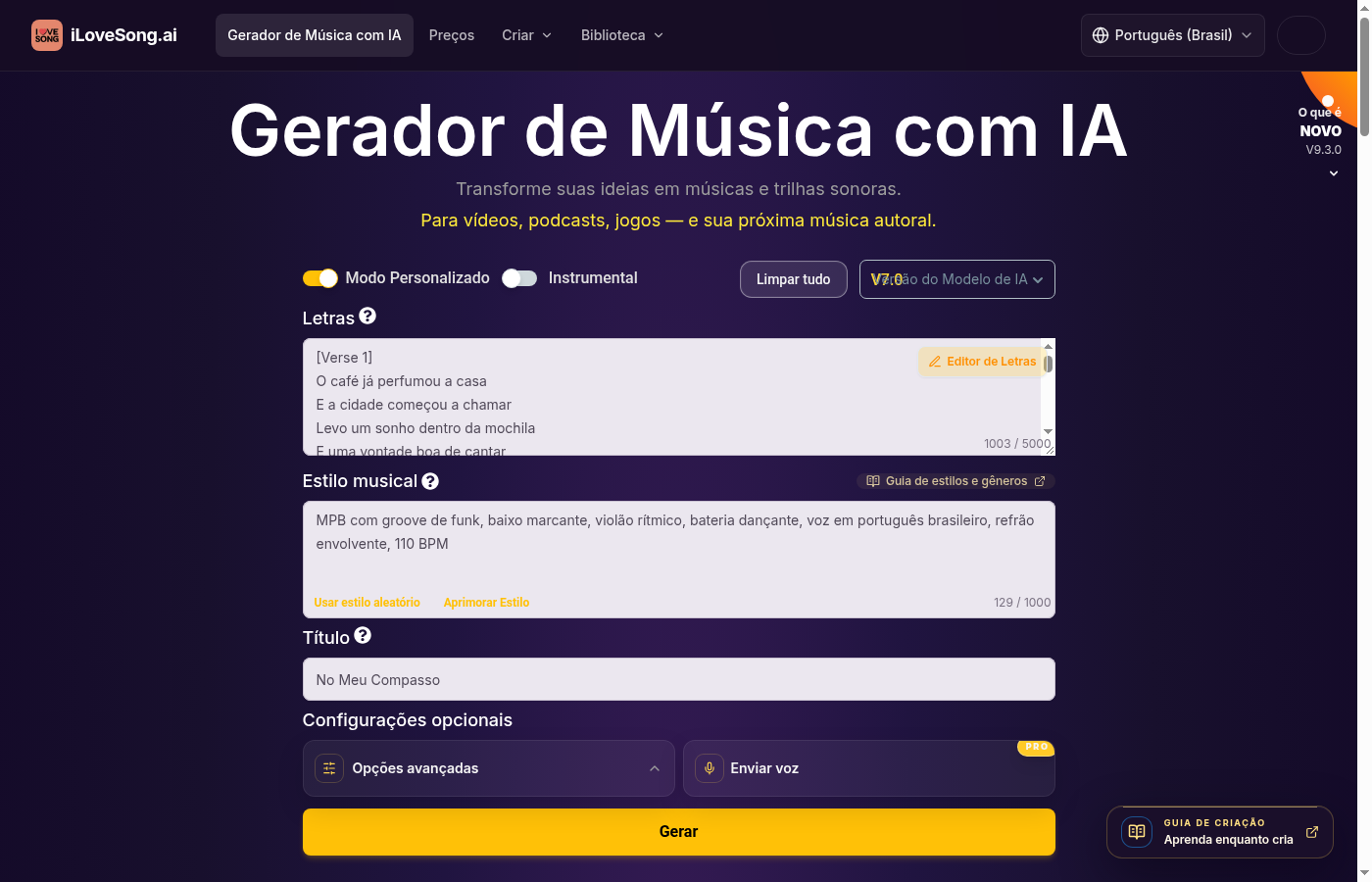
- The AI Singer Video Generator produces a lip-synced MP4 from a single portrait photo, removing the need for a separate video tool for short-form content.
- The Lyrics Studio with version history, autosave, and a songwriting assistant covers the full writing-to-generation workflow in one place, which most competing tools split across separate products.
- No free tier exists at all: the cheapest entry point is $14.80/month billed monthly, which is a hard barrier for anyone evaluating output quality before committing.
- Commercial licensing is not included on the Basic monthly plan according to the pricing page, meaning the most accessible tier leaves commercial use rights ambiguous for creators who need them.
- Generation consistency is documented as variable even with detailed prompts, and the new Max mode that addresses this costs one extra credit per generation, effectively taxing users who need reliable output.
MusicLab
- Generates both the style prompt and Suno-tagged lyrics together in one pass, saving the manual step of formatting section tags separately.
- 500 free credits on signup with no payment required, making it genuinely accessible for hobbyist use without a trial period or credit card.
- Prompt structure follows a documented five-block format covering genre, mood, tempo, instrumentation, and production keywords, which reduces output variance compared to freeform prompting.
- Suno-only by design: the output format is tied to Suno's tagging conventions and cannot be used directly with Udio, Udio, or other AI music platforms without manual reformatting.
- No visible paid upgrade path or credit top-up option was found at review time, leaving it unclear what happens when the 500 signup credits are exhausted.
- Built as a personal utility by a single developer and hosted on a subdomain of a ChatGPT site builder, raising real questions about long-term availability, maintenance, and data handling.
Our verdict
iLoveSong.ai verdict
iLoveSong.ai is the clearest choice for Brazilian Portuguese creators who want to go from a lyric idea to a shareable MP4 singer video in one tool, with Google Lyria 3 access included on every paid plan. The annual plan at $7.30/month is genuinely affordable, but there is no free tier at all, which puts it behind Suno and Udio for anyone who wants to test before committing. If you need professional voice cloning or text-to-speech rather than song generation, ElevenLabs is the better fit.
Read full iLoveSong.ai review →MusicLab verdict
MusicLab is the right pick for frequent Suno users who want a structured shortcut to consistent style prompts without learning Suno's tagging conventions by hand. It does less than competitors like SunoPrompt, which offers 12 interactive creative controls and works across multiple AI music platforms. Anyone who needs artist-style analysis, multi-platform output, or a no-account experience should look elsewhere.
Read full MusicLab review →