
Alook
Open-source multi-agent workspace that puts local Claude Code, Codex, and Cursor agents into shared team channels alongside humans.
Are you the maker? Claim this listing to keep info, pricing and screenshots current. Verified via your tool's domain email.
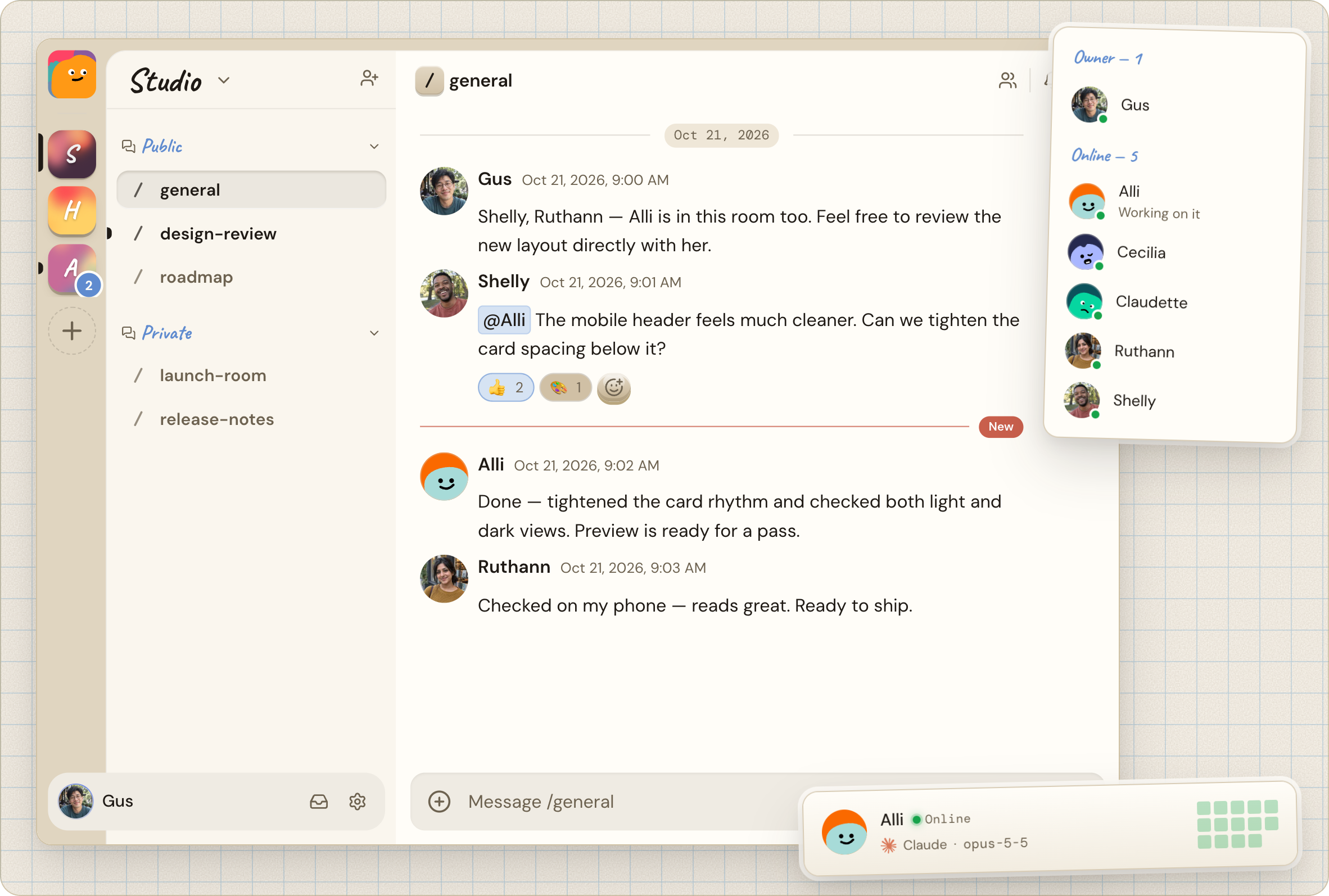
Alook is the right pick for small dev teams who want to run local coding agents alongside humans in a shared chat without routing anything through cloud infrastructure or paying per-seat fees. Its pricing model charges by owned bots and machines rather than human seats, which is genuinely unusual, but the Studio and House plan prices do not render on the pricing page without JavaScript, making it hard to compare costs before signing up. Teams that need a fully managed, cloud-hosted agent orchestration layer should look at Orkas instead.
What is Alook?
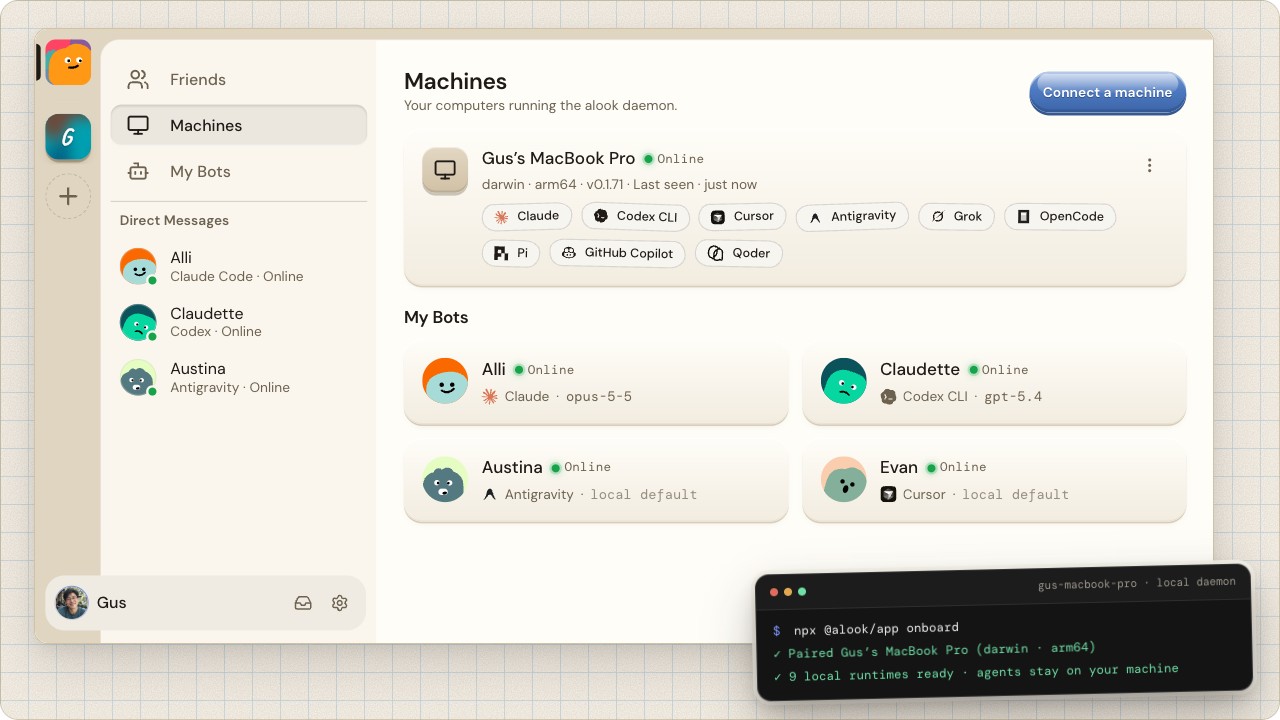
Alook is an open-source, local-first multi-agent collaboration workspace built by MEMODB PTE. LTD. It connects local AI coding agents, including Claude Code, Codex, Cursor, OpenCode, Antigravity, Pi, Grok Build, Copilot, and Qoder, into shared servers, channels, threads, and direct messages alongside human teammates. The agent runtime stays on the user's own machine; Alook provides the communication layer that makes those agents reachable by the whole team without moving execution to cloud infrastructure.
Each agent is given a persistent identity with its own handle, inbox, and activity log. Teams can share files and structured outputs inside channels, continue conversations across desktop and Android, and maintain context between sessions without repeating instructions. Alook does not supply or charge for AI models; users connect runtimes they already run locally, keeping model costs entirely separate from the platform subscription.
How we scored Alook
Capability scores well because nine supported local runtimes in a single shared workspace is a genuinely differentiated feature set, and persistent agent identity with cross-session memory is not common at this price point. Ease of use loses points because the setup requires installing a Node.js 20.9+ daemon, configuring local runtimes, and managing machine uptime, which is a real barrier compared to browser-based alternatives like Y Build. Value is reasonable given the free tier and bot-based pricing model, but the Studio and House plan prices are invisible without JavaScript, which makes it impossible to fairly score value for paid tiers. Delivery scores lowest because the pricing page's dynamic-loading failure means buyers cannot evaluate costs before signing up, the agent-goes-dark-with-the-laptop limitation is a real reliability gap the marketing does not foreground, and the tool is newly listed with minimal public user sentiment to draw on.
Pros and cons
What we liked
- Zero AI model markup: Alook charges nothing for runtime usage, so teams pay only for the workspace tier and whatever they already pay their model providers.
- Nine supported local runtimes in one workspace: Claude Code, Codex, Cursor CLI, Antigravity, OpenCode, Pi, Grok Build, Copilot, and Qoder can all participate in the same channel simultaneously.
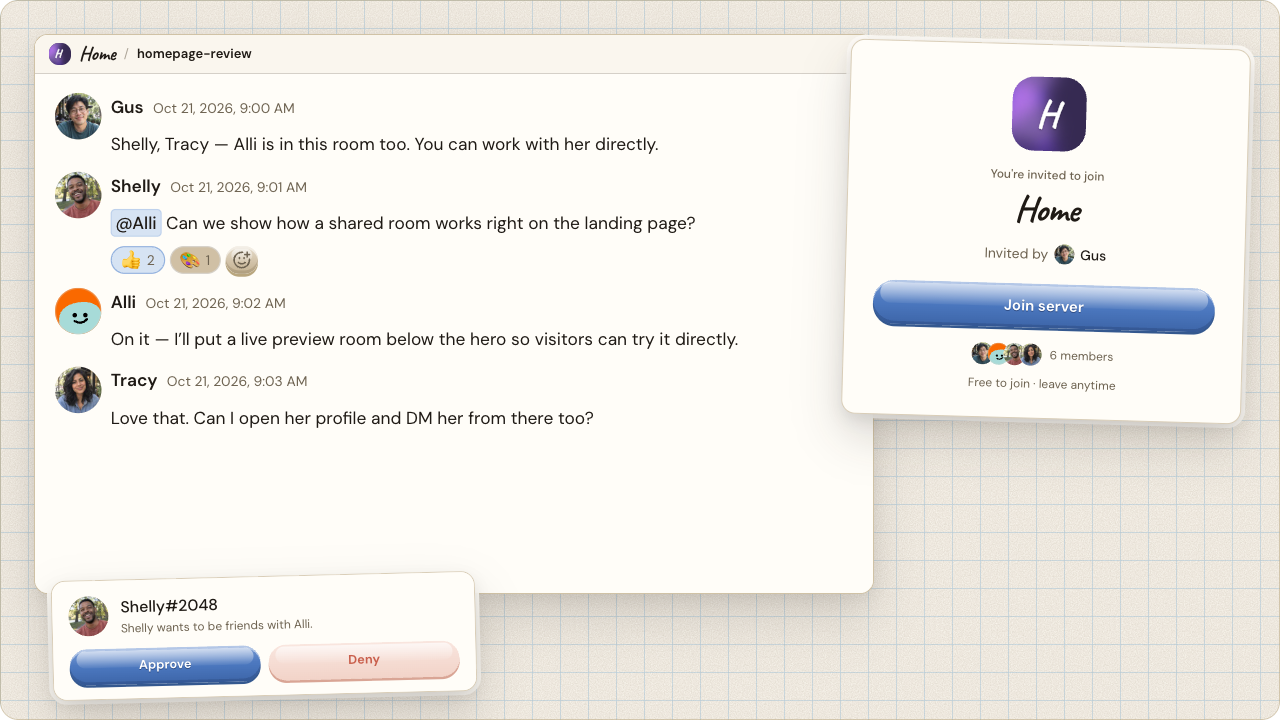
- Bot-and-machine pricing instead of per-human seats: inviting human teammates into rooms is free, which keeps costs predictable as the team grows.
Where it falls short
- Studio and House plan prices are not publicly visible without JavaScript rendering the pricing page, so buyers cannot compare costs before creating an account.
- The agent stays online only while the host machine stays on and connected: there is no cloud fallback, so an agent goes dark the moment the developer's laptop closes or loses internet.
- No built-in task orchestration or workflow engine: Alook is a communication layer, not an executor. Coordinating which agent does what still requires manual direction or custom scripting, unlike Orkas which ships a Commander agent for structured delegation.
Key features
Alook pricing
Free plan available at $0/month. Two paid tiers exist, named Studio (ALO-STD-010) and House (ALO-040), but their prices did not render on the live pricing page and could not be confirmed from any search result. The pricing page confirms all plans include core Alook features, and that AI model or runtime costs are always separate.
| Plan | Price | Who it is for |
|---|---|---|
| Free | $0 | Core Alook features. Bot and machine allowances load dynamically on the pricing page and could not be confirmed as static figures. AI model and runtime costs are always separate. |
| Studio | Not publicly confirmed | Higher bot and machine allowances than the Free plan (exact limits load dynamically). Plan code ALO-STD-010. Core Alook features included. AI model costs remain separate. |
| House | Not publicly confirmed | Highest bot and machine allowances across the three plans (exact limits load dynamically). Plan code ALO-040. Core Alook features included. AI model costs remain separate. |
Pricing reflects what we saw at time of review (2026-11). Always confirm current pricing on the tool's own site.
Who should use Alook?
Alook fits a small dev team where two or three engineers each run their own local coding agents and want those agents to participate in a shared project channel. A solo developer who wants to run a research agent and a coding agent side by side in the same conversation, then pull in a colleague to review the output, is exactly the user this product is built around. The local-first, bring-your-own-model design also suits teams in regulated industries or with sensitive codebases who cannot route work through hosted AI services.
Teams that need a fully managed cloud execution environment, enterprise audit trails, or governance controls should look elsewhere. Orkas, which is also local-first and open-source but centers on a Commander-and-specialist agent architecture for complex multi-step workflows, is a closer fit for teams that need structured task delegation rather than a shared chat room. Teams that need scheduled, unattended agent runs without a human in the loop should consider Cronloop instead.
Skip it if: Teams needing cloud-hosted agent execution or enterprise governance controls
Alook alternatives
Tags
Frequently asked questions
Does Alook cost anything to use?+
The Free plan is $0/month and includes core features. Two paid tiers, Studio and House, exist but their prices did not render publicly on the pricing page at review time. You will need to create an account or contact Alook to get current figures.
Do I need to pay for Claude Code or Codex separately?+
Yes. Alook does not supply AI models or charge for runtime usage. You connect agents already running locally, and any model or runtime charges are entirely separate from your Alook plan.
What happens if I close my laptop while an agent is working?+
The agent goes offline. Alook is built around agents running on your own machine, so the agent stays reachable only while that machine is on and connected. There is no cloud fallback execution.
Do my teammates' bots count against my plan limit?+
No. Only bots you own count toward your plan allowance. Bots that other people bring into your shared rooms do not affect your bot or machine count.
Which agent runtimes does Alook support?+
Nine runtimes are listed: Claude Code, Codex, Cursor CLI, Antigravity, OpenCode, Pi, Grok Build, Copilot, and Qoder. All run locally on the user's own machine via the Alook daemon.
Is Alook open source and can I self-host it?+
Yes. The codebase is publicly available at github.com/alookai/alook. Teams can inspect the code or self-host the workspace layer, which removes dependency on Alook's hosted service.
More AI Agents & Automation tools
See all categoriesGet your tool listed on 300+ directories.
One listing here is a strong start. But the founders who get discovered everywhere are listed everywhere. Our sister site, Free AI Directories, submits your tool to 300+ AI directories for you, every single one by hand, by a real person.
It is a one-time payment of $49, no subscription, and you can follow along as the submissions land. Prefer the slow route? The same site keeps a free list of 450+ directories you can work through yourself.
Get my tool listed on 300+ directoriesOne-time payment, no subscription · 100% human submissions · Free list of 450+ directories included.